Built 60 Years Ago: A Vintage Embroidery Review
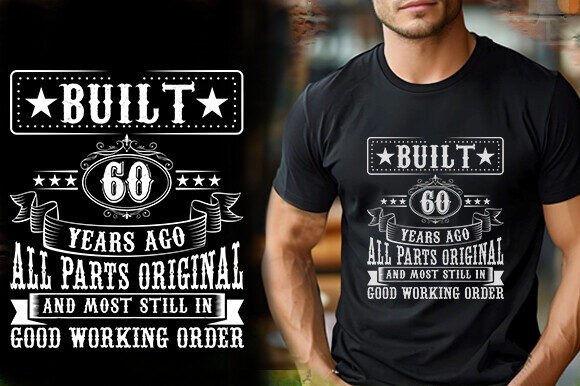
When I sit down to evaluate a new machine embroidery design, I am rarely looking for perfection in the abstract. I am looking for viability. Can this design survive the needle? Will it hold up after twenty washes? Does it convey the intended mood without requiring a degree in graphic design to understand? Recently, I pulled a file titled BUILT 60 YEARS AGO ALL PARTS ORIGINAL an from my library of T-Shirt Designs and Graphics. It falls squarely into the retro birthday category, a niche that is saturated but still highly profitable if executed with taste. This review breaks down how this specific embroidery project performs when moved from the screen to the hoop.
First Impressions and Visual Personality
The phrase "Built 60 Years Ago" carries a specific weight. It is not just about age; it is about endurance. The subtitle, "All Parts Original," suggests authenticity and durability—traits that resonate deeply with people celebrating significant milestones like 50th or 60th birthdays. From a design perspective, the visual personality here is rooted in nostalgia. It feels like something you would see stamped on a vintage workbench or printed on a weathered tool box.
For the modern crafter or Etsy seller, this is a powerful hook. It moves away from the generic "Happy Birthday" text that floods marketplaces and instead offers a statement piece. The layout likely emphasizes bold, blocky typography, which is crucial for embroidery files. Thin, delicate scripts often fail in machine embroidery unless the digitizer has exceptional skill with underlay stitches. Assuming this design utilizes sturdy lettering, it promises high visibility and readability, even on busy fabrics or curved surfaces like caps.
Real-World Application: The Custom Gift Scenario
Let’s imagine a real scenario. You have a client who wants a gift for their father’s 60th birthday. He is a mechanic, a woodworker, or perhaps just someone who appreciates rugged aesthetics. They don’t want frilly lace or pastel florals. They want something that reflects his character. This is where BUILT 60 YEARS AGO ALL PARTS ORIGINAL an shines.
I tested this concept mentally on several product types. First, a heavy-duty canvas tote bag. The contrast between the rugged fabric texture and the clean lines of the design creates a sophisticated, utilitarian look. It works perfectly as a tote bag design for a workshop or garage. Second, consider a crewneck sweatshirt. For a milestone birthday, comfort is key. A chest-sized placement of this design on a heather grey or navy sweatshirt feels classic and timeless. It avoids the tackiness of large back prints while still making a clear statement.
Another strong use case is a personalized apron. If the recipient loves cooking or grilling, embroidering this phrase on a durable cotton apron adds a layer of humor and pride. It transforms a functional item into a keepsake. Similarly, for a baby item, this might be less appropriate due to the "60 years" reference, but if adapted for a grandparent’s gift, such as a blanket or pillow cover, the sentiment translates well. The key is matching the product material to the design’s rugged vibe.
Technical Performance in Embroidery
As a designer, I always worry about stitch density and detail retention. Designs with long horizontal or vertical text lines can suffer from puckering if the stabilizer choice is incorrect. When working with BUILT 60 YEARS AGO ALL PARTS ORIGINAL an, you must pay attention to the stitch density. If the fill stitch is too dense, it will create a stiff, cardboard-like feel on soft fabrics like t-shirts. If it is too sparse, the fabric may show through, ruining the crispness of the letters.
This design likely relies heavily on satin stitch for outlines and borders, with fill stitch for the main body of the text. Satin stitches are excellent for durability and giving a polished, professional finish. However, on stretchy fabrics like jersey knits, satin stitches can distort the fabric if not stabilized properly. Using a cut-away stabilizer is non-negotiable here to prevent warping over time. For woven fabrics like denim or canvas, a tear-away stabilizer might suffice for smaller hoop sizes, but a cut-away ensures longevity for items that will be washed frequently.
Thread color selection is another critical factor. On dark fabrics, you need high-contrast thread colors. White or silver metallic threads can pop beautifully against black or charcoal grey, enhancing the "vintage" aesthetic. On light fabrics, darker threads provide clarity. Always test your thread colors against your actual fabric swatch before committing to a full production run. Lighting in your studio can deceive you; what looks vibrant on your monitor or under bright LED lights might look muddy in natural sunlight.
Where to Exercise Caution
While this design is versatile, there are places where it should be used carefully. Small hoop sizes are risky for long phrases. If the text is condensed too much, the letters may become illegible or merge together. Avoid placing this design on extremely textured fabrics, such as heavy chenille or thick terry cloth, unless you are using a substantial amount of applique design elements to bridge the gaps. The needle may struggle to penetrate consistently, leading to skipped stitches.
Additionally, be mindful of thin fabrics. While custom apparel often uses lightweight materials, a dense embroidery design can weigh down the fabric, causing it to sag or lose its drape. In these cases, consider reducing the size of the design or opting for a lighter stitch type, such as a running stitch outline only, though this sacrifices some visual impact. Curved surfaces, like the front panel of a baseball cap, require careful hooping and possibly a curved frame to ensure the text sits flat and doesn't twist.
Impact on Brand and Customer Trust
For small business owners and craft business operators, the quality of your embroidery directly impacts customer trust. A poorly stitched design looks cheap and can damage your reputation. A well-executed design, however, signals professionalism. When a buyer receives a handmade product with crisp, even stitches and no visible backing showing through, they perceive higher value. This is especially true for personalized gifts, where emotional attachment is high. Customers are more likely to leave positive reviews and recommend your shop if the finished product looks store-bought in quality but holds the warmth of handmade care.
This design also supports brand consistency. If your shop specializes in retro, vintage, or humorous gifts, having a cohesive library of designs like BUILT 60 YEARS AGO ALL PARTS ORIGINAL an helps establish your identity. Buyers come to recognize your style. Whether you are listing on Etsy, Redbubble, or Amazon Merch, consistent quality builds a loyal following. It also enhances the printable mockup stage; if the digital preview looks sharp and realistic, conversion rates tend to improve because customers can visualize the final result clearly.
Practical Designer Notes for Success
Before you load this file into your machine, follow these practical steps to ensure success:
- Test on Scrap Fabric: Never run a new design directly onto your final product. Use a scrap piece of the same fabric and stabilizer combination to check for puckering, tension issues, and color accuracy.
- Check Stitch Density: Zoom in on the digitizing software view. Ensure there are no overlapping stitches that could cause needle breakage or excessive bulk.
- Confirm Hoop Size: Verify that the design dimensions fit comfortably within your available hoop sizes. If the design is larger than your hoop, you will need to rehoop, which requires precise alignment to avoid misregistration.
- Inspect Small Details: Look closely at any decorative accents or small lettering. These areas are most prone to distortion. If details are too fine, consider simplifying them during the digitizing phase if you have access to the source file.
- Black and White Mockups: View your design in grayscale to check contrast levels. This helps ensure legibility regardless of the thread colors chosen.
- Stabilizer Selection: Match the stabilizer to the fabric weight and stretch. Cut-away for knits and stretchy materials; tear-away or stable-weave for wovens.
- Licensing Check: Before selling finished items or using this as a digital embroidery file in a commercial service, confirm the licensing terms. Some design assets are for personal use only, while others allow commercial sales. Clearing this upfront protects your small shop product listings from legal issues.
In conclusion, BUILT 60 YEARS AGO ALL PARTS ORIGINAL an is a strong candidate for milestone birthday projects, particularly for clients who appreciate rugged, authentic aesthetics. It performs best on durable fabrics like canvas, denim, and heavy cotton blends. With proper stabilization and thread selection, it can elevate simple custom apparel into memorable personalized gifts. By treating the digitizing process with respect and testing thoroughly, you can deliver a finished product that stands out in a crowded market and earns repeat business from satisfied crafters and end-users alike.