Just a Dad Who Always Came Back with the
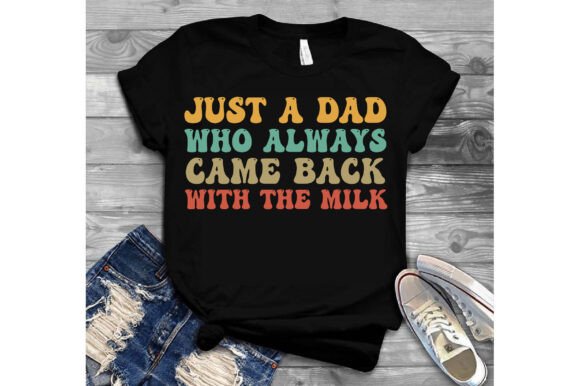
As someone who has spent years dissecting embroidery files and testing them on everything from delicate organza to heavy-duty denim, I approach every new digital asset with a healthy dose of skepticism. The market is flooded with designs that look great in a mockup but fall apart under the needle. Recently, I evaluated a design titled Just a Dad Who Always Came Back with the. At first glance, it seems like a standard novelty phrase, but when you strip away the marketing fluff and look at the structural integrity and emotional resonance of the piece, it reveals itself as a surprisingly robust option for specific commercial and personal projects.
First Impressions: Mood and Visual Personality
The immediate appeal of this design lies in its narrative simplicity. It taps into a universal sentiment—the reliable, perhaps slightly humorous, presence of fatherhood. Unlike complex graphical illustrations that require high thread counts to convey detail, this design relies on typography and layout. For an embroidery designer, this is often a double-edged sword. Text-based designs are unforgiving; there is no texture to hide behind if the stitch density is off or the font choice lacks clarity.
The visual personality here is casual and warm. It feels less like a corporate logo and more like a handwritten note stitched onto fabric. This makes it particularly effective for handmade products where authenticity is key. When I first loaded the file into my digitizing software, the layout felt balanced. The spacing between letters suggests a relaxed confidence, which aligns perfectly with the "just a dad" vibe. It doesn’t scream for attention; it whispers a story. This subtlety is crucial for high-end boutique items, where understated elegance often outsells loud graphics.
Real-World Application: From Screen to Stitch
To truly understand the value of Just a Dad Who Always Came Back with the, we need to move beyond the screen and imagine it on physical goods. Let’s consider a real-life scenario: preparing a custom embroidered tote bag for a local craft fair. You want something that stands out but also feels personal enough to warrant a higher price point. This design fits that niche perfectly.
When applied to a canvas tote, the text becomes a statement piece. It works well as a central chest placement or even centered on the front panel of the bag. The contrast against natural cotton or dark navy canvas would be striking. However, the true test comes with apparel. Imagine this design on a heavyweight sweatshirt for a family gathering or a holiday gift. The phrase lends itself to cozy, comfortable garments. It transforms a simple black crewneck into a personalized gift that celebrates reliability and humor.
I also see potential in baby items. While the phrase references fatherhood, the aesthetic can be adapted for gender-neutral nursery decor or baby onesies meant as gifts for new dads. The clean lines of the typography ensure that it remains legible even on smaller scales, provided the hoop size allows for adequate resolution. For an Etsy seller, this versatility is gold. It allows you to list the same design across multiple product categories—tote bags, sweatshirts, caps, and aprons—maximizing your return on investment for a single digital purchase.
Where Caution Is Required
No design is without its limitations, and Just a Dad Who Always Came Back with the is no exception. There are specific situations where this file requires careful handling. First, consider small hoop sizes. If you attempt to stitch this on a tiny patch or a narrow cap brim, the lettering may become cramped. Embroidery machines have physical constraints; if the stitches are too close together on a small area, the fabric can pucker, distorting the message. Always check the bounding box of the design before committing to small-scale production.
Textured fabrics pose another challenge. While linen and burlap add charm to tote bags, they can obscure fine details. If the design includes thin serifs or delicate connecting lines, these might get lost in the weave of a rough fabric. In such cases, a smooth cotton twill or polyester blend will yield a much cleaner result. Additionally, stretchy fabrics like jersey knits require proper stabilizer usage. Without it, the tension of the stitching can cause the garment to warp, making the text appear wavy or uneven.
Dark fabrics demand attention to thread color. If the design is primarily light-colored, you must ensure sufficient contrast. Conversely, if the text is dark, it might disappear on black fabric unless you use a metallic or bright accent thread. Testing thread colors on scrap fabric is non-negotiable. What looks good on a white background might vanish on charcoal gray. Furthermore, dense stitch areas should be avoided on curved surfaces like hats. The tension required to keep the fabric flat during stitching can lead to puckering around the curves, ruining the professional finish.
Practical Designer Notes for Execution
Before integrating Just a Dad Who Always Came Back with the into your workflow, there are several technical steps you must take. Start by reviewing the stitch density. High-density fills can make a project feel stiff and plastic-like, especially on wearable items. If the file contains large fill stitches, consider breaking them up or using a lighter density setting to maintain fabric drape.
Inspect the small details closely. Are there any tiny decorative accents or intricate corners? These are prone to breakage or misalignment if the machine isn’t calibrated correctly. Running a test run on scrap fabric is essential. This allows you to check thread color contrast, confirm hoop size compatibility, and identify any potential trimming issues. I also recommend creating black-and-white mockups to evaluate the design’s readability independent of color distractions. This helps ensure that the shape and layout hold up regardless of the final thread palette.
Another critical step is confirming licensing terms. Since this is sold as a printable sublimation design and editable file, verify whether it permits commercial use for finished products. Some licenses restrict the number of items you can sell or prohibit resale of the digital file itself. As a professional, protecting your business means understanding these boundaries. If the license is unclear, contact the creator or assume personal use only until clarified.
Impact on Brand and Customer Trust
Using a well-executed design like this one directly impacts your brand consistency and customer trust. A sloppy stitch job can undermine the perceived value of your handmade product, no matter how beautiful the concept. Conversely, a clean, precise embroidery job signals professionalism. When customers receive a personalized gift with sharp, clear lettering, they associate that quality with your entire brand. This builds loyalty and encourages repeat business.
The emotional connection of the phrase also plays a role in buyer engagement. People buy gifts for fathers not just for the object, but for the sentiment. Just a Dad Who Always Came Back with the evokes nostalgia and appreciation. It resonates with buyers looking for meaningful presents for holidays, birthdays, or Father’s Day. By offering a design that captures this emotion effectively, you position yourself as a seller who understands the deeper needs of your customers.
Final Verdict
In conclusion, Just a Dad Who Always Came Back with the is a versatile and emotionally resonant addition to any embroidery designer’s library. Its strength lies in its simplicity and broad applicability across various product types, from tote bags to sweatshirts. However, success depends on technical execution. By paying attention to fabric choice, stitch density, and licensing, you can transform this digital asset into a profitable and cherished finished product. For craft business owners and Etsy sellers looking to expand their catalog with reliable, heartwarming designs, this file offers solid potential. Just remember to test thoroughly, respect the material, and let the quality of your work speak for itself.